LN jg1978-03-10.interview.all.fm-zimmerman.82210.flac1644
I love these March '78 interviews. 3/11/78 is my absolute favorite, all kinds of great stuff. This one has less going on, but still interesting to the likes of me.
Jerry Garcia Band Interview
WCMF-FM Studios
129 Leighton Avenue
Rochester, NY 14614
March 10, 1978 (Friday) afternoon
46 minute Alan Zimmerman FM cassette
(7 tracks, 46:25)
jg19780310d3t001. Reuben and Cherise (album version) [3:45]
jg19780310d3t002. talk (1,2,3) [3:39]
jg19780310d3t003. Rain [5:46]
jg19780310d3t004. talk (4,5,6,7) [15:55] %
jg19780310d3t005. Love in the Afternoon [3:58]
jg19780310d3t006. talk (8,9,10,11,12,13) [10:46]
jg19780310d3t007. Gomorrah [2:40]
! Band: Interview
! personnel: Jerry Garcia
! personnel: John Kahn
! personnel: Donna Jean Godchaux
! personnel: ?? (primary interviewer)
JGMF:
! Recording: symbols: % = recording discontinuity; / = clipped song; // = cut song; ... = fade in/out; # = truncated timing; [ ] = recorded event time. The recorded event time immediately after the song or item name is an attempt at getting the "real" time of the event. So, a timing of [x:xx] right after a song title is an attempt to say how long the song really was, as represented on this recording.
! TJS: none.
! db: shnid 82210 (this fileset)
! map: https://goo.gl/maps/4fyWc14xjgm
! seealso: JGMF, "One of the Great Interviews of the Garciaverse," http://jgmf.blogspot.com/2012/11/jg1978-03-11interview45minsfm-gefen.html.
! seealso: JGMF, "The Little Engine That Could," https://jgmf.blogspot.com/2017/12/the-little-engine-that-could.html, for show listening notes. Spoiler: it didn't slay me.
! R: Recordist: Alan Zimmerman; over-air FM broadcast (WCMF, 96.5 FM) > cassette, unknown gear;
! R: Transfer and FLAC encoding by David Minches: Master played back on Nakamichi Dragon > Digital Audio Labs Card Deluxe soundcard > Adobe Audition > flac encoding > FLAC.
! historical: John Kahn sounds zonked.
! t02 (1) talk about having just been in Rochester with the GD a few months prior. JG: "Rochester keeps calling us back. 'Come back for Garcia Band. Come back, come back.'"
! t02 (2) @ 1:14 Q How did Maria get involved with the tour?" JG: "Well, uhhhh ... luck, I suppose. [Donna chuckles sweetly] Actually, what happened was that back when I did an album about 3 or 4 years ago and John produced it and he had Maria come in to do some vocal work on the record. Since then we've worked kind of informally. And John and Maria live together. [He swallows his words a little bit. Asks John, aside, "if that's OK, if you don't mind my mentioning that?" JK: "Oh, it's quite all right."] And so on this album she participated a lot, too, on the vocals and stuff and she's also accompanied us on a few other tours. And it's neat to have her singing with us. Donna and Maria sing really well together and they like working together. So, just, chemically it works out really nicely." DJG: "We don't fly together [?], you know." JG: "And I like having all those pretty girls onstage." [Kahn laughs.]
! t02 (3) DJ: we have a super advanced pressing of your latest album. We heard a test pressing just before we left CA 3 or 4 days ago. Record radio stations will be getting promo copies, in record stores soon. @0250 "What kinds of musical directions are you trying to take on this record? There's a touch of reggae in it--" JG: "Every direction. We don't really have a style, except that it's all us." JK: "It sounds like us, is the direction. It's trying to sound the most like us of anything we've done so far." Song introduction "Rain", written by Donna, orchestration and arrangement by John Kahn.
! t04: DJ (4) Young kids still into the Dead. What do you attribute that to? JG: we've been lucky in having a spotty record career. No real big hits. contra formulaic thing, slam-bang show. Exciting the first time. The theatrics. You realize you're seeing the same thing, that gets to be dull. Audience doesn't want to ... DJ: so when you take the stage, do you have any songs in mind? JG we don't know what we're gonna do. We have a low boredom index. It would be horribly boring for us to do the same shows all the time. Constitutionally incapable of doing it. some times a dud, other times magical, miraculous. Exceptionally high concentration of coincidence. Musical coincidences are occurring way higher than the law of probability would allow them to be. Like magic. People come to that because there's something genuine about it. A mysterious thing. Something that people require. Being encouraged by the audience. Audience is participating. This talk is vague between GD vs. JG. Jerry can't identify great moments per se. completely out of our hands high energy environment ... in this testing situation. people follow all around the country. Maybe they asked him not to mention GD?
! personnel: t04 @ 4:55 JK sounds totally wrecked
! t04 (5) @0846 working with Robert Hunter. JK sometimes Garcia will have pages of words and write music to that. Or sometimes we'll write music that doesn't have words and give that to him. So it goes different directions. JG: All kinds of fine tuning possibilities. I'll have ideas that have vocal phrasing and sing the phrasings to him. We work very freely together."
! t04 (6) domestic scenes. @0956 Do you live and work together. Too many of us to live together. @1030 JG Basically we all have our own scenes and families and so forth ... or whatever. We're all, live near each other, and we hang out an awful lot together, we spend more hours together than we do living anywhere else. @1055 DJG we'll be playing at place called Keystone "Long time, no see." We've chosen to work that way.
! t05 (7) Club Front @11:33 studio setup. @1139 JG This record is the first record from that studio. ... This record is the first thing from that studio, which ... was partly funded ... partly built from the budget that I was allowed to make this record. It's quite well equipped. It has a really nice Neve console, from England, and a really nice Studer machine, Swiss, and it's an excellent sounding room. It's a very large room and it really sounds very pretty. Has very pretty vocal sound, pretty instrumental sound. We're really delighted with the results. We're real happy." #Club Front
! t04 (7) DJ ask John for song intro JK "Influenced by reggae music, which I love a whole lot. Reggae was the most significant thing that happened, for bass players, in ten years maybe." More reggae talk JK: "We might have heard the best reggae records." JG: "I don't think there's going to be some kind of explosion. It's a local thing. It has a limited appeal. But from a musician's standpoint it has some very interesting things that American music could use right now." DJ: "Like what?" JG: "A rhythmic approach, a whole approach to rhythm that has to do with standing on the rhythm in a certain way. The easiest way I can relate to it is to figure about 93 degrees, with about a hundred percent humidity, in the middle of somewhere, just goin' real slow, y'know? [he has a grin]. And it has a steadiness to it that comes from a kind of island life, like the surf, y'know ... and the thing about the bass playing, that John was saying, the sense of the rhythmic ... the holes, the spaces, having rhythmic value, in the same sense of that positive-negative image sense. So, the holes have the same kind of rhythmic values that the notes do, and that gives it a tremendous power, and a lovely kind of rhythmic thing." JK: "as a bass player, a long time ago, especially r and b records, old motown records, the bassline was one of the most important elements, counterpoint to the vocal, and the drums. Music has gotten away from that now. ... music directly related to the bassline has died out in America, and it's an element of reggae music that appeals a lot to me." #reggae
! t04 DJ started spinning Palm Sunday instead, accidentally.
! t06 (8) current music: Elvis Costello JG: "I like it." likes some New Wave. Really like Cheap Trick. What I like about it is the spirit. They're puttin' out. They're trying hard. The heavy duty production trick ... the glib slickness so mechanical and predictable and safe. It's a formula trip. Raw and real nasty, and the players are not very good, but the spirit ... young people can always dig that. JK: I dig it. I'm not young anymore. 5-min mark talking about The Who
! t06 (9) @0645 solo project outside the GD. JG "It's an illusion. The illusion is that these are solo projects, when they're really not solo projects. Like what we do in this band, it's no solo project. It's really a group contribution, and believe me, it's not a matter of my own personal activity. I am involved with people who care about music the same way that I do, we have an affinity for each other, we enjoy working together, and, for me, a group dynamic is way more interesting than the concept of a solo project. I've done one solo project, my first solo record, in which I was foolish enough to try to play everything on it myself and I was really bored with it, fundamentally, because you already know everything that happened, there's no surprises. The thing of working with other people, that somebody's gonna shed a new kind of light on an idea of yours ... it gives you something to work with ... there's electricity, or chemistry, or something like that." #solo vs GD
! t06 (10) @0746 DJ is it true that the banjo was your first instrument? @0747 JG: "Yeah, it was my first serious instrument. DJ: "And then you went to the guitar, and then the electric guitar, because it was more of an extension of--" JG: "Uhh, I've, well, for me, the banjo got to be so, uhhh ... [long pause] [JK: "Swiss watch-like." JG: "Right.] Like a Swiss watch. It was like a cuckoo clock or a Swiss watch. It got to be tremendously mechanical and I, finally just had a tremendous reaction to it, it's like, 'I really can't make music with this instrument. I want something that moves the way a voice moves. I want to be able to play more expressively. ... I just burned myself out on the banjo, really, is what it boils down to." DJG: "It's kind of a one-toned ..." JG: "Yeah, it's got one thing going for it." DJ @0835: Do you ever think about going back doing something like the OAITW record? @0837 JG "For me, it was the music ... [cross talk that John was also involved] And for me, the neat thing, my whole interest in the banjo even was really not so much the banjo itself, but bluegrass music as a style of music. And it's the music that I cared about, rather than the banjo by itself. So it's very hard for me to, say, sit at home and practice the banjo. If the music were there --in other words, if I were out playing with friends, a couple of nights a week-- I could get into it. But really the music matters to me more than the banjo does." JK: "Yeah, really, it's a beautiful kind of music." JG: "It is, it's really neat music." JK: "But, y'know, I couldn't see practicing ... either ... uhhh ... [JG, laughing: "No." Some chuckling, as if the thought of practicing is hilarious.] DJG: "Jerry doesn't think he plays the banjo or the steel guitar" JK: "We're all crazy like that, that's normal" (??). #banjo
! t06 (11) @0927 DJG: "He's talking about his first record, my four year old listens to it three or four times a day." JK: "I like that, too. ... I remember going in there and watching him play bass on that." JG: "Oh Jeez, that was embarassing." JK: "No it wasn't."
! t06 DJ we should wrap things up, get them to soundcheck.
! t06 (12) DJG: "Singing with Maria's great." Stress the point that Maria is part of the band. JG: "Yeah."
! t06 (13) JG introduces Gomorrah. JG: "This is an Old Testament song. Everybody knows about Sodom, but this song is about Gomorrah."
Showing posts with label banjo. Show all posts
Showing posts with label banjo. Show all posts
Saturday, December 16, 2017


Saturday, May 13, 2017
Black Roots about Native Americans?
I am thinking about Native American musical influences on Garcia.
As far as I can tell, they are mediated by whites: Hank Williams's "Kaw-Liga," Bill Monroe's "Cheyenne,"Peter Rowan's "Land Of The Navajo" (which the latter inspired).
Is there any black traditional music with Native American narrative or musical themes? Like, any old banjo tunes about the Seminoles?
Some notes on classifying Garciaverse Musics
In narrating Jerry Garcia's Musical Life Outside The Grateful Dead, I think in terms of the various musics he played.
One cut is geographic: 1) world vs. 2) American.
In terms of musics he directly quasi-publicly performed, The World is mostly only reggae and Indian music (e.g., Diga). He got some stuff from Canada, but it was either Americana (e.g., The Band) or pan-white pop (e.g., Bruce Cockburn's "Waiting For A Miracle") - not what I'd call "Canadian music".
Everything else from The World comes to Garcia pre-mediated through America.
Within the second bucket, I want to distinguish a) indigenous music (Hawaiian, Native American) from b) music made by non-indigenous peoples.
As noted above, Native American music came to Garcia pre-mediated by whites. When he played "Native American", he was playing white renderings of that music. I am guessing he jammed around at Hart's with Rolling Thunder and others -- I wonder if there are calendars, diaries, tapes?? --, but it falls sort of short of my fuzzy event threshold ("musics he directly quasi-publicly performed").
It seems like the same is likely true of the other indigenous American music that Garcia engaged, Hawaiian. Let me put it another way: he directly heard Hawaiian music (grandmother Tillie loved it - McNally 2015, 36), but in playing pedal steel guitar he was playing what white people were doing, inspired by the islanders' music. So it doesn't get the full-on music font.
b) is the set of musics that get the special font and the central real estate in my table on Garciaverse musics.
As far as I can tell, they are mediated by whites: Hank Williams's "Kaw-Liga," Bill Monroe's "Cheyenne,"Peter Rowan's "Land Of The Navajo" (which the latter inspired).
Is there any black traditional music with Native American narrative or musical themes? Like, any old banjo tunes about the Seminoles?
Some notes on classifying Garciaverse Musics
In narrating Jerry Garcia's Musical Life Outside The Grateful Dead, I think in terms of the various musics he played.
One cut is geographic: 1) world vs. 2) American.
In terms of musics he directly quasi-publicly performed, The World is mostly only reggae and Indian music (e.g., Diga). He got some stuff from Canada, but it was either Americana (e.g., The Band) or pan-white pop (e.g., Bruce Cockburn's "Waiting For A Miracle") - not what I'd call "Canadian music".
Everything else from The World comes to Garcia pre-mediated through America.
Within the second bucket, I want to distinguish a) indigenous music (Hawaiian, Native American) from b) music made by non-indigenous peoples.
As noted above, Native American music came to Garcia pre-mediated by whites. When he played "Native American", he was playing white renderings of that music. I am guessing he jammed around at Hart's with Rolling Thunder and others -- I wonder if there are calendars, diaries, tapes?? --, but it falls sort of short of my fuzzy event threshold ("musics he directly quasi-publicly performed").
It seems like the same is likely true of the other indigenous American music that Garcia engaged, Hawaiian. Let me put it another way: he directly heard Hawaiian music (grandmother Tillie loved it - McNally 2015, 36), but in playing pedal steel guitar he was playing what white people were doing, inspired by the islanders' music. So it doesn't get the full-on music font.
b) is the set of musics that get the special font and the central real estate in my table on Garciaverse musics.
Sunday, April 17, 2016
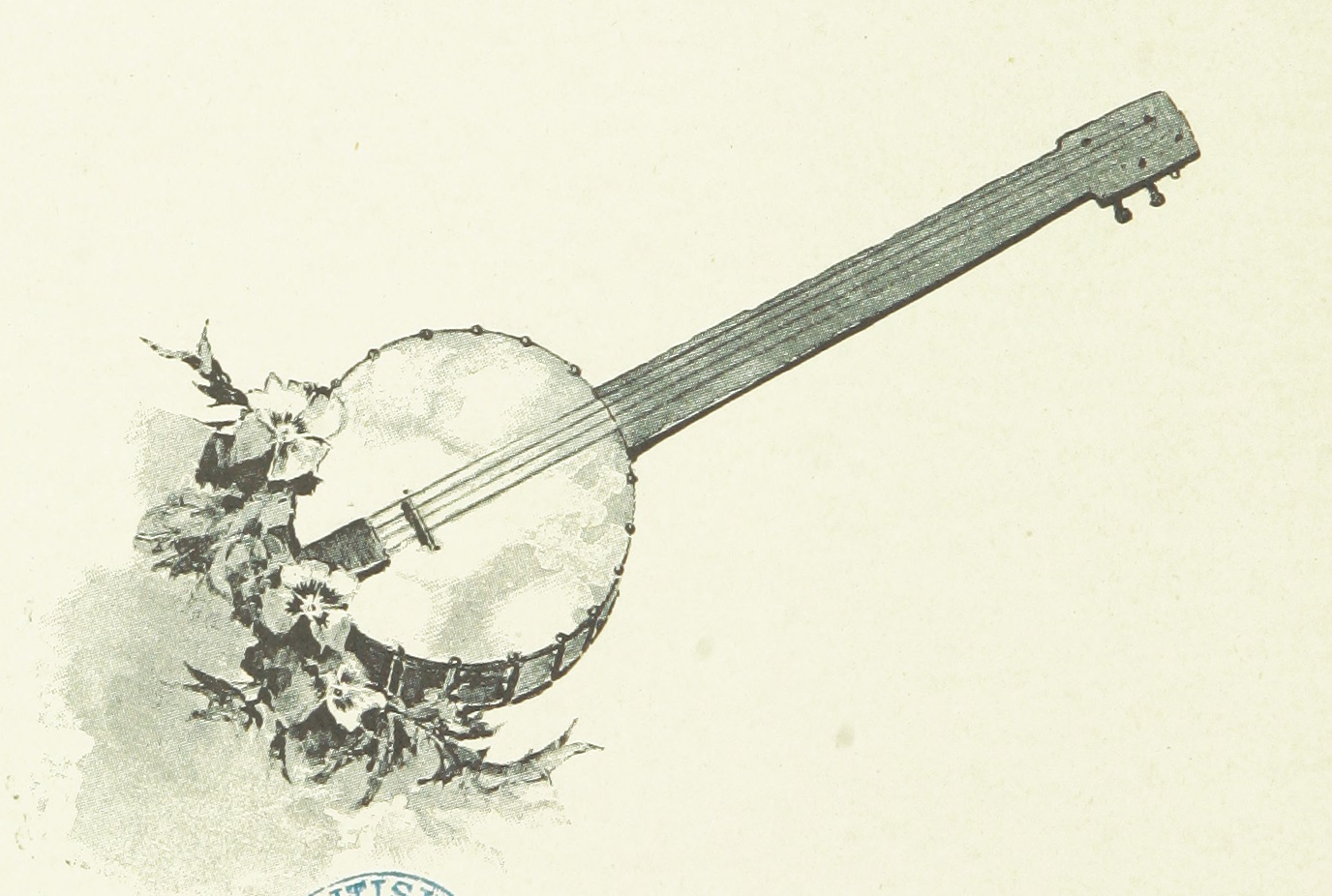
Banjo
Dubois, Laurent. 2016. The
Banjo: America’s African Instrument. Cambridge, MA: Belknap Press of
Harvard University Press. en route as of 20160417
Keïta, Cheick M. Chérif. 1995. Massa Makkan Diabaté: Un Griot mandingue à la rencontré de l'écriture. Paris: Éditions L'Harmattan. to read
Keïta, Cheick M. Chérif. 1995. Massa Makkan Diabaté: Un Griot mandingue à la rencontré de l'écriture. Paris: Éditions L'Harmattan. to read
Sunday, May 24, 2015
Reading Notes - Loren 2014
Loren, Richard, with Stephen Abney. 2014. High Notes: A Rock Memoir. Demariscotta,
ME: East Pond Publishing.
When I read a book that I will need to be able to cite chapter and verse, this is how I arrange the chapters and verses. I just pull out quotes and other observations, I effectively tag them, and I sort them into the relevant files. So these aren't really reading notes, just cullings.
That said, I think Richard Loren's book High Notes is nice, well-written, informative, warm but also suitably dispassionate and detached. I learned a lot. Some of the many things of interest to me are David Grisman, Rowan Brothers, Stinson Beach, OAITW, drugs, banjo, Hells Angels, official releases, John Scher, John Lennon, Europe, The Movie, Nicky Hopkins, James Booker, Sirens of Titan.
Notes below the fold.
Notes below the fold.
Sunday, December 28, 2014
OAITW at Homer's Warehouse - March 4, 1973
This started off, and can still function, as a post with the setlists for the 3/4/73 OAITW gigs at Homer's Warehouse. But now there are a few other fragmentary thoughts.
Jerry Garcia lived an idyll at Sans Souci (18 Avenida Farallone, Stinson Beach, CA, 94970, map). It was his most domestic period,
living with MG and their daughters Sunshine Kesey and Garcias Annabelle (b.
2/2/70) and Trixie (b. 9/21/74). I have lots to say about Sans Souci, but not
here/now. Idylls pool time up, and idyllic Sans Souci hearkened pretty deeply
to the past, in some ways the counterbalance to the amazing professional growth
Jerry was living with his side projects (the first big one of which, Garcia, had bought them the house) and, especially,
the Dead.
Breaking out the old banjo, which he hadn't played in a
sustained way since about 1963, is of course a throwback move, both in terms of
Jerry's biography and, of course, in the tapestry of American music. With old
and new musical friends David Grisman,
Peter Rowan and often involving Chis Rowan and Lorin Rowan [a.k.a. "The Brothers"], OAITW formed a pretty
pure roots project, a deep dig into rural white American musical canon, Garcia
on 5-string banjo, an ancient African instrument which was one of so many to
cross putative racial divides. The pull of the past is strong in OAITW.
But it also has a real fresh taste of ambition and hard work,
even leaving aside stuff like starting a record company (which would happen on
July 15, 1973). Just musically, picking up the banjo in ca. late 1972 and
getting serious about it in 1973 is really grasping the nettle. Once before Garcia
had walked away from banjo because it just demanded too much self-discipline,
too much time to do right, an instrument which could only be attacked with a
single-minded fury, rough on the dilettante. It posed a real challenge, he knew
this, and he tackled it, again, practicing not only religiously at home, as
Mountain Girl recounts, but bringing his banjo on tour with the Dead ("You
know that banjos act funny at weird altitudes? Why, my banjo sounded just great
in Salt Lake City" – Jerry ca. 3/13/73 [Tolces 1973]).
In Garcia's world, you know it's getting good when it goes
public, from sitting on the edge of the bed to standing onstage, with an
audience which may well be paying for the privilege. After a particularly tasty
take of Grisman's "Old And In The Way" in a Stinson Beach living
room, Garcia made these boys an offer they couldn't refuse. "Beautiful. We've
got a full band. We can go down and take over Sweetwater. ... We'll just work
up a few tunes and take it on down there. Kreutzmann owns the place."[1]
The fly on the wall reports that this is the birth of the idea of taking the
band out in public, gigging around. Playing Sweetwater is not getting paid, in
all likelihood, maybe some beer and coffee. Playing
the bar in Stinson Beach, maybe not any different. But when the curtain
draws and things go public in the Garciaverse, Mr. Price Mechanism shows up
soon enough, and these young go-getters tear out of the gates like bats out of
hell, with six live gigs and a live radio broadcast in four days! They
certainly didn't lack for energy.[2].
 |
| Table xxx. Old And In The Way but Fast Out Of The Gate. |
The band's third night out found it the newly up-and-running
and frequently rocking Homer's Warehouse in Palo Alto, at 79 Homer Avenue (map). This is a nicely burnished picture: Garcia
hadn't played the banjo regularly in ten years, and he hadn't played Palo Alto
regularly in a decade, either. Between times, there were a few visits to
Stanford, with Jerry and Merl opening for Big Black at the Frost Amphitheatre
on 10/3/71 (Grushkin 1971, JGMF),
and the Dead playing Maples Pavilion on 2/9/73, but Garcia's last gig in a Palo
Alto club had been a flurry of woodshedding arrangements at the Poppycock in
late 1969. Before that was probably with the Mother McCree's Uptown Jug
Champions and, as pre-Dead, falls beyond my scope. "This would be a
homecoming of sorts for Jerry", Bernstein notes. "He'd not been
around Palo Alto for a while, and we wanted him to feel comfortable. Perhaps he
would return for more appearances if it felt right to him. We knew this was a
great opportunity to make a splash. All fingers and toes were crossed"
(Bernstein 2013, 114).
It sounds like Mr. Price and Ms. Vibe danced well together
this night. Some color:
["Peruvian Marching Powder"] was making its way around the Purple Room-not copious amounts, just enough to keep things lively. The band all wanted coffee, no beer or anything stronger. Of course, there was always a joint going around. At the bar, we had sold more beer than anticipated and thought we'd run out of kegs because Lou, the driver, had not completely filled our order. I called the president of the Coors franchise, a nice Italian guy, and told him the driver cut me short on kegs. He apologized. He couldn't take a truck out of the yard, but he would leave his home, pick up six kegs with his Lincoln, and bring them over to us. Midway through the dynamite second show, he arrived with his son and brought all six kegs through the back door. He said the keg driver was cutting everyone short, just to make trouble in anticipation of a teamsters' strike in the Bay Area (Bernstein 2013, 116).
Color is great, but we can also engage the subtleties of chiaroscuro,[3]
maybe a sepiatone of a simple day-in-the-life of an ambitious, engaged,
super-talented, successful thirtyish professional, Jerome John Garcia. He rolls
up at 1 in the afternoon for two Sunday shows, smokes and picks some, plays
protean video games for two hours while drinking black coffee, plays two
sellout shows (three encore calls at the early show, "the audience went
wild after the second" one), plays another hour of games and drives Pete
Rowan and himself home (Bernstein 2013, 113-118). Not too bad, all told.[4]
Setlists follow.
Old And In The Way
Homer's Warehouse
79 Homer Avenue
Palo Alto, CA 94301
March 4, 1973 (Sunday) – 3 PM and 9 PM
no known recording
--3 PM early show (main set + encores) (10 songs, max 90
minutes)--
--main set (7 songs, ca. 60-75 minutes)--
The Willow Garden
Going To The Races
Wild Horses
Soldier's Joy
Land Of The Navajo
Lonesome L.A. Cowboy
Blue Mule
--encores (3 songs, ca. 15 minutes)--
Panama Red
Till The End Of The World Rolls 'Round
White Dove
! setlist: The set and encore structure are not made
explicit on AB's setlist, but he recalls "After an hour and a half, the band
finished [a] third encore to thunderous applause", and lays out this list
(see Bernstein 2013, 116-117).
--9 PM late show (12 songs)--
Going to the Races
Katie Hill
Till the End of the World Rolls 'Round
Panama Red
White Dove
Knockin' on Your Door
Fanny Hill
Land of the Navajo
Wild Horses
Blue Mule
Lost
Hard Hearted
! ACT1: Old And In The Way
! lineup: Jerry Garcia - banjo, vocals;
! lineup: David Grisman - mandolin, vocals;
! lineup: John Kahn - bass;
! lineup: Peter Rowan - guitar, vocals.
JGMF:
! JGC: none as of 12/28/2014.
! db: none as of 12/28/2014.
! db: none as of 12/28/2014.
! metadata: solid as a rock, via Bernstein 2013, 113-118, ads in the Stanford Daily.
! ad: Stanford Daily, February 23, 1973, p. 6; bills"Bluegrass music with Old And In The Way featuring Jerry Garcia [name was larger, prominent] plus the Rowan Bros." This ad also had some other gigs, Nick Gravenites and whatnot.
! ad: Stanford Daily, February 27, 1973, p. 6; this one is just OAITW. "The New Homer's Warehouse ... presents Old And In The Way featuring Jerry Garcia formerly with The Warlocks, David Diadem formerly with Earth Opera, Peter Rowan, formerly lead guitar with Sea Train. Special guests The Rowan Brothers."
! ref: Arnold, Corry. 2013. February 1973, unnamed bar, Stinson Beach, CA: Old And In The Way. Lost Live Dead, June 6, URL http://lostlivedead.blogspot.com/2013/06/february-1973-unnamed-bar-stinson-beach.html, consulted 12/28/2014.
! ad: Stanford Daily, February 27, 1973, p. 6; this one is just OAITW. "The New Homer's Warehouse ... presents Old And In The Way featuring Jerry Garcia formerly with The Warlocks, David Diadem formerly with Earth Opera, Peter Rowan, formerly lead guitar with Sea Train. Special guests The Rowan Brothers."
! ref: Arnold, Corry. 2013. February 1973, unnamed bar, Stinson Beach, CA: Old And In The Way. Lost Live Dead, June 6, URL http://lostlivedead.blogspot.com/2013/06/february-1973-unnamed-bar-stinson-beach.html, consulted 12/28/2014.
! ref: Bernstein, Andrew J. 2013. California Slim: The Music, the Magic, and the Madness. Xlibris
LLC.
! ref: Grissim, John. 1973. Garcia Returns to Banjo:
Splendor in the Bluegrass. Rolling Stone,
April 26, 1973, p. 14.
! ref: Grushkin, Paul D. 1971. Garcia, Saunders Impressive
at Frost. Stanford Daily, October 5,
1971, unknown page [JGMF].
! ref: McNally, Dennis. 2002. A Long Strange Trip: The Inside History of the Grateful Dead. New
York: Broadway Books.
! ref: Tolces, Todd. 1973. Jerry's Bluegrass Boys. Melody Maker 48 (April 28): 35. [JGMF
reading notes].
! seealso: JGMF: URL http://jgmf.blogspot.com/2012/04/ln-jg1973-05-04jgmsallsbd.html
[1]
"Bluegrass at Grisman's" (sound recording).
[2]
Note another pattern that we have often had occasion to observe: new band =
off-the-beaten path, smaller, and/or off-night gigs. The Share in San Anselmo,
Homer's in Palo Alto, and the Inn in Cotati certainly qualify.
[3]
As, e.g., on display at http://jgmf.blogspot.com/2014/12/free-caravaggio.html.
[4]
Morbidly, contrast with Pigpen, who is on his deathbed and would pass away on
Thursday, March 8th (McNally 2002, 447).
Friday, December 19, 2014
Dropping the Banjo
4640 What I was trying to do was basically mathematical, mechanical. It was basically like a dead end, it stopped being interesting. I never really decided, it was just ‘I can’t play this thing anymore’. … LSD made me want to hear longer sounds, be freer, not be restricted, musically, and not be such a victim of self discipline 4704 – banjo is a heavy discipline instrument, and I just didn’t feel like getting that serious, I didn’t want to have that much discipline, I didn’t want to express that much discipline. Plus, the thing of being loud was great.
Note to self the drugs-music connection here, too. For those who say that drug-talk is off-limits and that one should focus on music-talk, I'd note that Garcia himself acknowledged at least a little bit of a connection.
Garcia, Jerry,
1942-1995, “Ben Fong-Torres interviews Jerry Garcia. Interview recorded circa
1975 for the documentary radio program "What was that?" broadcast on
KSAN-FM in San Francisco [radio broadcast],” Grateful
Dead Archive Online, accessed November 10, 2013, http://www.gdao.org/items/show/379555.
Subscribe to:
Posts (Atom)