I have been listening to the integral E72, starting from 4/7 and working my way forward. Not obsessing about details, just listening while pedaling. Some random thoughts.
4/7 has a lot of bucking bronco energy, but lacks discipline.
4/8 so much more controlled and effective than the first night. What a great night of entertainment for the crowd.
4/11 There is so much going on in the Truckin -> Drums -> Other One piece, universes of stuff. Each guy seems to have a bag of trick licks that he's throwing out to the rest of them. Amazing group invention, too much really to process.
4/14 The Dark Star -> Sugar Magnolia -> Good Lovin' -> Caution -> Good Lovin' is truly great. The Dark Star goes a thousand places, and Pigpen's earthy, raunchy rap (ca. 15-17 minutes in of the track below) is one for the ages: https://archive.org/details/gd1972-04-14.136980.mtx.dusborne.flac16/gd72-04-14s2t08.flac
4/16 I am on now, first set feels below average. But set II looks very promising.
More Random Thoughts
It's a good way to soak this material in. It might take me all summer to do it, but so far it's been fun, even listening to the tunes I'd normally FF >> .
"Looks Like Rain" has the pedal steel which is nice, but good golly do I hate that song.
The Pigpen numbers are great: bootlegs used to have his putative last album as Bring Me My Shotgun, and Pig's weapon of choice appears both in "Mr. Charlie" ("won't take yo life | won't even take y'limb | just unload my shotgun | take a little skin") and the sweet, charming, "Chinatown Shuffle" ("get yourself a shotgun | a pocket full of shells | and we can while away the time"). I have to think Hunter would have wanted these for the final, never-to-be-made third installment of the Ramblin' Rose trilogy, but Ace and Europe '72 bigfooted it.
I am surprised at how short the Playin's are - less than ten minutes the first few nights of the tour. Since I have never really soaked E72 in, I might only be projecting when I imagine that this will extend over the course of seven weeks on the road.
I see that there was an Other One - El Paso sandwich the first night, but it didn't mark me, and I am looking forward to hearing some more Other One -> cowboy tune sandwiches. There's a moment in 4/14 where Me And My Uncle and Caution are both happening (MAMU never really materializes, you understand), and it makes me wish they had played around more with those sorts of possibilities.
see also:
http://bozosandbolos.blogspot.com/
http://deaddisc.com/disc/Europe_72_Box.htm
Showing posts with label Pigpen. Show all posts
Showing posts with label Pigpen. Show all posts
Thursday, May 25, 2017


Sunday, April 09, 2017
GD Fillmore West April 9, 1970
https://archive.org/details/gd1970-04-09.137104.aud.cousinit.flac16/gd1970-04-09-d2t03.flac
What a hottie this Good Lovin' jam is!
These shows are only represented in imperfect audience tapes, but they are crucial documents from a period relatively underrepresented on soundboard tape. 7/12/70 at the Fillmore East is another one of these shows that has gotten too little attention because of soundboard snobbery. For this period, which rages, audience tapes are mostly all we have.
! R: Seeder cousinit provides these notes: "I believe this is a different AUD version compared to [Harry] Ely's master. An example is how Katie Mae differs (to me) in the way the guitar is captured. In the Ely version the guitar can barely be heard. This version has the guitar much more prominent."
! P: seeder notes: The Other One is a absolute monster ..."
This whole show just sizzles, and in all kinds of different ways. Pigpen shines, fronting one of the world's great electric backing band on "It's A Man's, Man's, Man's, Man's, Man's World," and feeling his solo acoustic country blues with "Katie Mae", who walks around "like she got oil wells in her back yard."
"Cowboy Song" is a true oddity. No-one seems entirely sure that it's David Bromberg, and perhaps feel it's not him at all? I wonder if this could have been not the folkie but that gentleman of the same name who wrote Guitar Player's Garcia feature in 1971? Often these music journalists did some picking (see the GPI Guitar Jam in whatever year that was). It might just be spurious, someone's wild guess.
Looking forward to hearing this Other One.
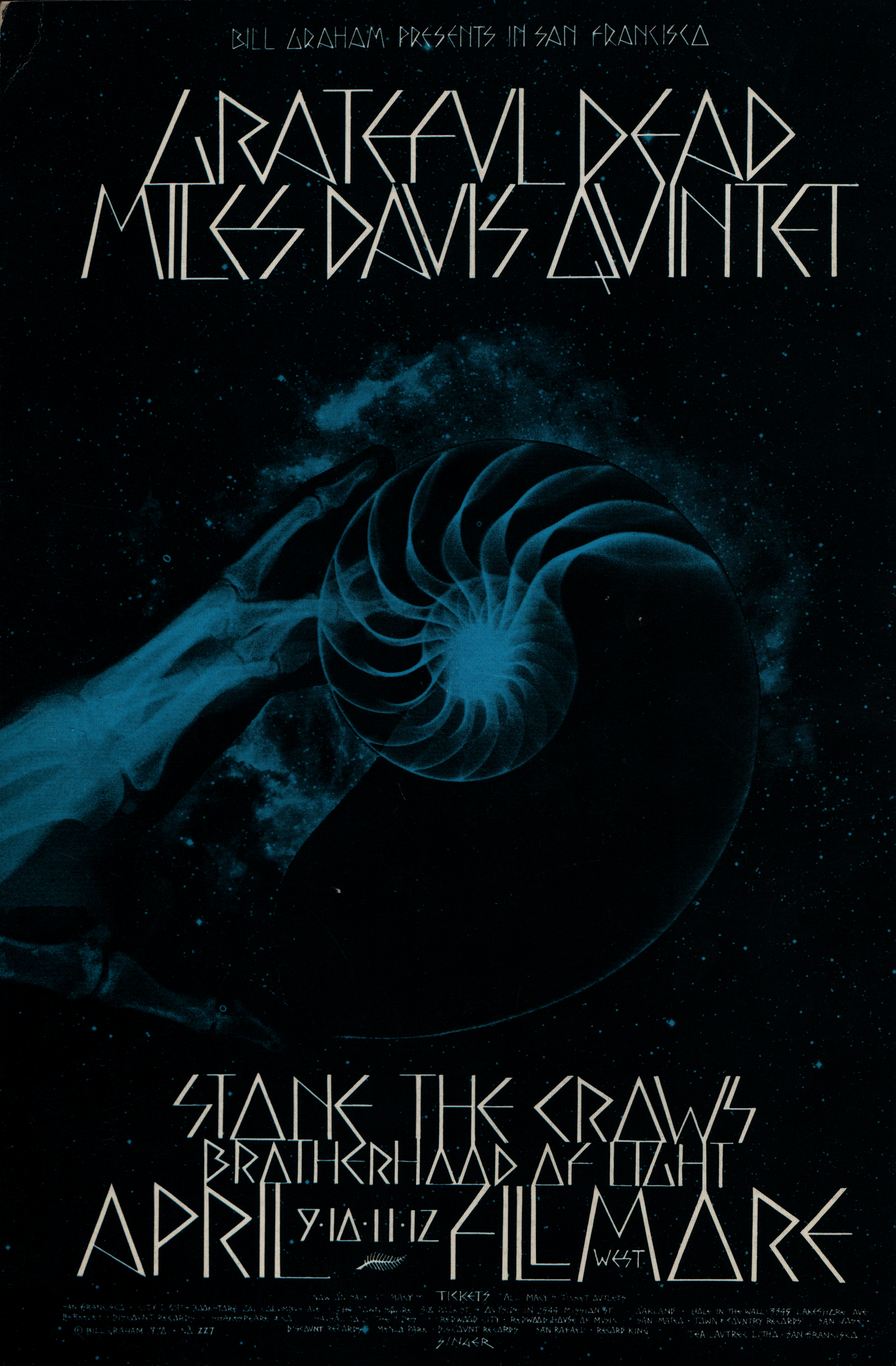
What a hottie this Good Lovin' jam is!
These shows are only represented in imperfect audience tapes, but they are crucial documents from a period relatively underrepresented on soundboard tape. 7/12/70 at the Fillmore East is another one of these shows that has gotten too little attention because of soundboard snobbery. For this period, which rages, audience tapes are mostly all we have.
! R: Seeder cousinit provides these notes: "I believe this is a different AUD version compared to [Harry] Ely's master. An example is how Katie Mae differs (to me) in the way the guitar is captured. In the Ely version the guitar can barely be heard. This version has the guitar much more prominent."
! P: seeder notes: The Other One is a absolute monster ..."
This whole show just sizzles, and in all kinds of different ways. Pigpen shines, fronting one of the world's great electric backing band on "It's A Man's, Man's, Man's, Man's, Man's World," and feeling his solo acoustic country blues with "Katie Mae", who walks around "like she got oil wells in her back yard."
"Cowboy Song" is a true oddity. No-one seems entirely sure that it's David Bromberg, and perhaps feel it's not him at all? I wonder if this could have been not the folkie but that gentleman of the same name who wrote Guitar Player's Garcia feature in 1971? Often these music journalists did some picking (see the GPI Guitar Jam in whatever year that was). It might just be spurious, someone's wild guess.
Looking forward to hearing this Other One.
Friday, April 11, 2014
A Pigless Monster at the Fillmore East: July 12, 1970
LN jg1970-07-12.nrps-gd.aud-cooper.122707.flac1644
More old listening notes.
The "Not Fade Away" and "Good Lovin'" from the electric Dead set feature absolutely top shelf rock and roll playing. Look at how I go off on this stuff wow wow wow wow wow and all that. If this tape sounded better, this'd be in the canon with 5/2/70.
Note that Pigpen never makes himself heard - Weir sings "Good Lovin'".
Don't ask me about the metadata - I will not be the one to figure out what was played on what dates (and what we mean by "dates" for these midnight shows) during the four-night July 1970 run of Fillmore East Dead shows.
The AGD set looks great on paper, but it doesn't set me on fire. The NRPS set is a wreck, and probably incomplete on this fileset. Get drawn in by the rarities, but stay for the quintet scalping.
An Evening With The Grateful Dead
Fillmore East
105 2nd Avenue
New York NY 10003
July 12, 1970 (Sunday)
Jim Cooper aud shnid-122707
--set I: Acoustic Grateful Dead (8 tracks, 29:56, presumed incomplete)--
s1-AGD-t01. //El Paso [#2:23] [0:04] % [0:02]
s1-AGD-t02. Friend Of The Devil [3:53] [0:02] %
s1-AGD-t03. /New Speedway Boogie [10:17] [0:02] %
s1-AGD-t04. /So Sad (To Watch Good Love Go Bad) [2:36]
-enter David Nelson-
s1-AGD-t05. (1) [0:03] Rosa Lee McFall [2:51] % [0:04]
s1-AGD-t06. A Voice From On High [2:37] % [0:04]
s1-AGD-t07. Jordan [2:08] % [0:04]
s1-AGD-t08. Swing Low Sweet Chariot [2:48] %
--set II: New Riders of the Purple Sage (6 tracks, 29:42, presumed incomplete)--
s2-NRPS-t09. Six Days On The Road [3:44] %
s2-NRPS-t10. Whatcha Gonna Do [4:23] %
s2-NRPS-t11. Truck Drivin' Man [3:52] % [0:03
s2-NRPS-t12. Dirty Business [6:30] %
s2-NRPS-t13. Lodi [5:03] %
s2-NRPS-t14. Last Lonely Eagle// [6:07#]
--set III: Electric Grateful Dead (16 tracks [11 songs], 82:35, presumed approximately complete)--
s3-GD-t15. Morning Dew [0:43] %
s3-GD-t16. Morning Dew [con't] [1:48] %
s3-GD-t17. Morning Dew [con't] [0:54]
s3-GD-t18. Morning Dew [con't] [1:00] %
s3-GD-t19. Morning Dew [6:08] % [0:02]
s3-GD-t20. /Sitting On Top Of The World [#3:15]
s3-GD-t21. /Me And My Uncle [3:18] [0:02] %
s3-GD-t22. Not Fade Away [15:02] % [0:04]
s3-GD-t23. Casey Jones [5:00 % [0:05]
s3-GD-t24. Mama Tried [2:40] [0:03] %
s3-GD-t25. [0:03] % Good Lovin' [9:55] %
s3-GD-t26. Good Lovin' [con't [9:00] % [0:03]
s3-GD-t27. High Time (2) [7:32] [0:02] % [0:02]
s3-GD-t28. ... Cumberland Blues/ [#4:40#]
s3-GD-t29. China Cat Sunflower [6:45] [-1:13] % [->]
s3-GD-t30. [+1:13] I Know You Rider [3:06] [0:02] % [0:04] % dead air [0:06]
! ACT1: Acoustic Grateful Dead
! lineup: Jerry Garcia - ac-g, vocals;
! lineup: Bob Weir - ac-g, vocals;
! lineup: Phil Lesh - el-b, ?vocals?;
! lineup: ?Bill Kreutzmann? - drums;
! guest: David Nelson - mandolin, vocals.
! ACT2: New Riders Of The Purple Sage
! lineup: John Dawson - ?ac?-g, vocals;
! lineup: David Nelson - el-g, vocals;
! lineup: Jerry Garcia - pedal steel guitar;
! lineup: Dave Torbert - el-b;
! lineup: Mickey Hart - drums.
! ACT3: Grateful Dead
! lineup: Jerry Garcia - el-g, vocals;
! lineup: Bob Weir - ael-g, vocals;
! lineup: Phil Lesh - el-b, vocals;
! lineup: Bill Kreutzmann - drums and percussion;
! lineup: Mickey Hart - drums and percussion;
! absent: Ron "Pigpen" McKernan.
JGMF:
! R: symbols: % = recording discontinuity; / = clipped song; // = cut song; ... = fade in/out; # = truncated timing; [m:ss] = recorded event time. The recorded event time immediately after the song or item name is an attempt at getting the "real" time of the event. So, a timing of [m:ss] right after a song title is an attempt to say how long the song really was, as represented on this recording.
! Jerrybase: it's complicated. What this Cooper tape identifies as 7/12/70
More old listening notes.
The "Not Fade Away" and "Good Lovin'" from the electric Dead set feature absolutely top shelf rock and roll playing. Look at how I go off on this stuff wow wow wow wow wow and all that. If this tape sounded better, this'd be in the canon with 5/2/70.
Note that Pigpen never makes himself heard - Weir sings "Good Lovin'".
Don't ask me about the metadata - I will not be the one to figure out what was played on what dates (and what we mean by "dates" for these midnight shows) during the four-night July 1970 run of Fillmore East Dead shows.
The AGD set looks great on paper, but it doesn't set me on fire. The NRPS set is a wreck, and probably incomplete on this fileset. Get drawn in by the rarities, but stay for the quintet scalping.
An Evening With The Grateful Dead
Fillmore East
105 2nd Avenue
New York NY 10003
July 12, 1970 (Sunday)
Jim Cooper aud shnid-122707
--set I: Acoustic Grateful Dead (8 tracks, 29:56, presumed incomplete)--
s1-AGD-t01. //El Paso [#2:23] [0:04] % [0:02]
s1-AGD-t02. Friend Of The Devil [3:53] [0:02] %
s1-AGD-t03. /New Speedway Boogie [10:17] [0:02] %
s1-AGD-t04. /So Sad (To Watch Good Love Go Bad) [2:36]
-enter David Nelson-
s1-AGD-t05. (1) [0:03] Rosa Lee McFall [2:51] % [0:04]
s1-AGD-t06. A Voice From On High [2:37] % [0:04]
s1-AGD-t07. Jordan [2:08] % [0:04]
s1-AGD-t08. Swing Low Sweet Chariot [2:48] %
--set II: New Riders of the Purple Sage (6 tracks, 29:42, presumed incomplete)--
s2-NRPS-t09. Six Days On The Road [3:44] %
s2-NRPS-t10. Whatcha Gonna Do [4:23] %
s2-NRPS-t11. Truck Drivin' Man [3:52] % [0:03
s2-NRPS-t12. Dirty Business [6:30] %
s2-NRPS-t13. Lodi [5:03] %
s2-NRPS-t14. Last Lonely Eagle// [6:07#]
--set III: Electric Grateful Dead (16 tracks [11 songs], 82:35, presumed approximately complete)--
s3-GD-t15. Morning Dew [0:43] %
s3-GD-t16. Morning Dew [con't] [1:48] %
s3-GD-t17. Morning Dew [con't] [0:54]
s3-GD-t18. Morning Dew [con't] [1:00] %
s3-GD-t19. Morning Dew [6:08] % [0:02]
s3-GD-t20. /Sitting On Top Of The World [#3:15]
s3-GD-t21. /Me And My Uncle [3:18] [0:02] %
s3-GD-t22. Not Fade Away [15:02] % [0:04]
s3-GD-t23. Casey Jones [5:00 % [0:05]
s3-GD-t24. Mama Tried [2:40] [0:03] %
s3-GD-t25. [0:03] % Good Lovin' [9:55] %
s3-GD-t26. Good Lovin' [con't [9:00] % [0:03]
s3-GD-t27. High Time (2) [7:32] [0:02] % [0:02]
s3-GD-t28. ... Cumberland Blues/ [#4:40#]
s3-GD-t29. China Cat Sunflower [6:45] [-1:13] % [->]
s3-GD-t30. [+1:13] I Know You Rider [3:06] [0:02] % [0:04] % dead air [0:06]
! ACT1: Acoustic Grateful Dead
! lineup: Jerry Garcia - ac-g, vocals;
! lineup: Bob Weir - ac-g, vocals;
! lineup: Phil Lesh - el-b, ?vocals?;
! lineup: ?Bill Kreutzmann? - drums;
! guest: David Nelson - mandolin, vocals.
! ACT2: New Riders Of The Purple Sage
! lineup: John Dawson - ?ac?-g, vocals;
! lineup: David Nelson - el-g, vocals;
! lineup: Jerry Garcia - pedal steel guitar;
! lineup: Dave Torbert - el-b;
! lineup: Mickey Hart - drums.
! ACT3: Grateful Dead
! lineup: Jerry Garcia - el-g, vocals;
! lineup: Bob Weir - ael-g, vocals;
! lineup: Phil Lesh - el-b, vocals;
! lineup: Bill Kreutzmann - drums and percussion;
! lineup: Mickey Hart - drums and percussion;
! absent: Ron "Pigpen" McKernan.
JGMF:
! R: symbols: % = recording discontinuity; / = clipped song; // = cut song; ... = fade in/out; # = truncated timing; [m:ss] = recorded event time. The recorded event time immediately after the song or item name is an attempt at getting the "real" time of the event. So, a timing of [m:ss] right after a song title is an attempt to say how long the song really was, as represented on this recording.
! Jerrybase: it's complicated. What this Cooper tape identifies as 7/12/70
! db: http://etreedb.org/shn/122707 (this fileset).
! archive: https://archive.org/details/gd1970-07-12.aud.cooper.122707.flac16
! map: https://goo.gl/maps/75Kk8
! venue: http://jerrygarciasbrokendownpalaces.blogspot.com/2011/11/fillmore-east-105-second-avenue-new.html
! R: field recordist: Jim Cooper
! R: field recording equipment: 2x Hitachi mics > Hitachi TRQ-222 Cassette recorder.
! R: field recording location: Row H, about the 30th row, center.
! R: "This is an incomplete recording and there is an electronic noise intermittently on the left channel. Talking and crowd noise is present as well."
! R: taper note: "This was a great concert and one of the best nights (mornings) of my life."
! R: this is definitely not a high-fidelity recording, and the L-channel static is quite present. Massive overload. But what are you gonna do? It's an amazing historical document. Thank you Jim Cooper and Rob Berger and all the tapers and sharers!
! metadata: I don't have time to get into the metadata now. I need to listen to all of the other tapes and read what's already known about the actual assignation of the various music to the various "July xx 1970 Fillmore East" recordings. Try to sort out calendar dates and times, so confused because of the ca. midnight starting time of these shows.
! P: This contains a pretty amazing EGD performance. For my money, The "Good Lovin'" is among the best they did. The AGD and NRPS sets are, respectively, just OK and pretty bad, at least based on this tape.
! P: t01 one of the great pleasures of the GD acoustic sets is hearing Jerry sing harmonies. Like on this El Paso.
! t04 is Jerry playing electric?
! song: "So Sad (To Watch Good Love Go Bad)" (t04): Everly Brothers' 1960 release, maybe a singleton in the recorded GD canon. Indeed, as of now (12/6/2013) I understand this to be a singleton. I have listened to it twice, don't get much out of it.
! s1-AGD-t05 (1) "IRIT & LAURIE LOVE": "I love you, Jimmy."
! s1-AGD-t05 RLM has mandolin accompaniment, presumably Nelson.
! s1-AGD-t06 AVFOH mandolin (Nelson?), Nelson definitely on harmony vocals
! P: t01-t08: the acoustic material underwhelms me. It looks great on paper. Maybe it's the tape quality. But I just can't get into it.
! P: t12 This "Dirty Business" has a weird feel. Torbert is walking it a little too much early on, and it never attains that deep, burning, grungy groove that the best versions do. This is *way* uptempo for this song. Interesting. Not totally successful. Weird. Interesting.
! P: t13 Lodi is kind of a mess, Dawson off, Nelson not keeping right tempo (check around 1-1:29). He has to keep trying to tell people to get off because no-one quite knows what to do. Train wreck.
! P t09-t13 The NRPS material is below average, I'd say. I hear lots of tempo weirdness. Of course, the tape isn't doing anyone any favors.
! P: t14 LLE again it just doesn't sound together. While Dirty Business is much too brisk, this is just a little bit too brisk.
! R: NRPS-t14 LLE cuts out, probably less than a minute missing.
! R: t15-t19 MD splices @ track markers and t17 @ 0:33.
! R: t20 SOTOTW clips in
! P: t21 MAMU This is done "electric GD" style, as opposed to "NRPS" style, which the Acoustic GD would on occasion do (e.g., 4/18/70 Family Dog). It's a shame, because I really like the high harmonies in the NRPS arrangement, but whatever. My sense is that GD just wasn't willing to let go of the song and let NRPS have it, and they seemed to prefer to play it electric to acoustic. (I also miss the NRPS harmonies on "Mama Tried", FWIW.)
! P: t22 NFA this is a MASSIVE rendition of an American classic. Jerry has the wah cranked up already in the setup to his first solo in the second minute. It's less pronounced in the solo itself, but for a second he hit wah to rival 8/27/72's "Greatest Story Ever Told". Yeah, I said it. @ 3:45 they start really cooking, Bob turns himself up a little, Jerry digging a little groove. Taper's girl getting a little chatty. 4:18 Bob starts a great little descending thing, they are a little bit in the AWBYG/GDTRFB outro theme for awhile, they could easily drop it right down into that, but they are not in a rush. Garcia quotes "First There Is A Mountain" @ 5:36 for a few seconds, and he's a little bit in that tempo, back to a chunky NFA line @ 6-minute mark, egging the crowd to keep that beat so he can wander back out. Crowd starts some very nice rhythm, and Jerry goes to about 60 degrees from his previous course, just the place he was looking for. Nice though over 7-min mark, stepping in a little more wah. Jerrys' in an "Other One" space late in the 8-minute mark, but Bob has something of his own going, and he doesn't take the bait, so Jerry comes back out and returns to the AWBYG/GDTRFB space. Here at 10:14 they could very easily turn it any of a number of directions, building some suspense 10:35, Phil and Jerry both pregnantly fluttering strings, Jerry hits a nice theme late in the 10-minute mark ... Bob strums some stuff, a little darker, and 11:23 Bob is almost playing Eyes Of The World! We'll hear these same chords in 1974. A few times it sounded to me like they could have pivoted to IKYR. In short, like a lot of 1970 NFAs, this one opens up very nicely and is highly thematic. @ 12:57 Bob forces them right back to NFA ... it was a little hasty ... they all get there, but I just don't think everyone was quite ready. So they set their feet under them, go once 'round the bases, at get to the verse @ 13:32ish. Jerry is having to do more harmony vocals, with Pig laying out somewhere. A few times I thought I heard Pig, but I don't think so.
! P: t25-t26 GL: Weir sings! Drum interlude 2:35-9:58. @ 4:35 a crowd member yells "Hey [or Yay] Pigpen!", or I thought he did. But Pig never makes himself heard. This drum session is hot as hell, and the crowd shows its appreciation early in the 9-min mark. The reprise is drummed up and drops in perfectly. Yeah! Nice rhythm led by Phil, 6- of t26 ... then a big bass solo 6:15 wow! This is a great jam. The second cut track of GL lays bare the band's raw power ... Wow. In the 2-min range of this track, Phil sounds like fucking Beethoven, and everyone is jamming alone and together, totally locked in but each carving his own groove, birds darting and ducking through and around the others, a supertight, colorful weave. Outstanding. Jerry hits a peak at 3:20 and the crowd yips a little bit, unbelieving. At 6 minutes into this track ... wow wow wow 6:15 Phil is doing his best Jack Casady. Ballin ... WOW. Jerry starts to get some waahhh, and he could be Jorma back there a little bit. Listen to what Phil runs over at 6:58 WOW WOW WOW 7:13 drops into Good Lovin' with the rest of the crew. Weir takes the vocals @ 7:29. @@
t27. (2) @ ca. 3ish High Time during tune, woman asks near taper “Want the cat? Text file note: "DELI BOVI DEBUT".
! R: t28 CB enters in progress and barely clips out, not much missing.
! P: t30 CCS transition from CCS to IKYR is Nice. Gets immediate liftoff at 3:28ish, Bob doing a really nice lead turn, he has some a long way from the spacy androgynous teenager of the Warlocks! Jerry's playing it real chonky behind him, and the whole band locks around Bob as he shreds. His transformation as a guitar player is mostly credit to Bob himself, of course, but I am sure the band around him had something to do with it! So Jerry starts expressing interest in taking a turn of his own in the 5:20 mark, by 5:43 we have IKYR theme. But the band is laying back, almost waiting for something, and Phil around 6:15 says "Hey, how about it?" The crowd cheers and starts clapping up IKYR, and I think Phil was basically taking a tip o' the hat, or soliciting one, but also offering one up to everyone in the room. "Hey, how about it, you having fun, or what?!?" They ought to be, because they have been grooving to a great American rock and roll band channeling a million cosmic megawatts. It's a nice moment all around. I can see why the taper, Jim Cooper, said "This was a great concert and one of the best nights (mornings) of my life."
! R: t29-t30 obviously I'd track the transition differently, but it's all good. There are some tape splices in this region, into the first minute ot the IKYR track (t30). Again @ 2:20.
! archive: https://archive.org/details/gd1970-07-12.aud.cooper.122707.flac16
! map: https://goo.gl/maps/75Kk8
! venue: http://jerrygarciasbrokendownpalaces.blogspot.com/2011/11/fillmore-east-105-second-avenue-new.html
! R: field recordist: Jim Cooper
! R: field recording equipment: 2x Hitachi mics > Hitachi TRQ-222 Cassette recorder.
! R: field recording location: Row H, about the 30th row, center.
! R: "This is an incomplete recording and there is an electronic noise intermittently on the left channel. Talking and crowd noise is present as well."
! R: taper note: "This was a great concert and one of the best nights (mornings) of my life."
! R: this is definitely not a high-fidelity recording, and the L-channel static is quite present. Massive overload. But what are you gonna do? It's an amazing historical document. Thank you Jim Cooper and Rob Berger and all the tapers and sharers!
! metadata: I don't have time to get into the metadata now. I need to listen to all of the other tapes and read what's already known about the actual assignation of the various music to the various "July xx 1970 Fillmore East" recordings. Try to sort out calendar dates and times, so confused because of the ca. midnight starting time of these shows.
! P: This contains a pretty amazing EGD performance. For my money, The "Good Lovin'" is among the best they did. The AGD and NRPS sets are, respectively, just OK and pretty bad, at least based on this tape.
! P: t01 one of the great pleasures of the GD acoustic sets is hearing Jerry sing harmonies. Like on this El Paso.
! t04 is Jerry playing electric?
! song: "So Sad (To Watch Good Love Go Bad)" (t04): Everly Brothers' 1960 release, maybe a singleton in the recorded GD canon. Indeed, as of now (12/6/2013) I understand this to be a singleton. I have listened to it twice, don't get much out of it.
! s1-AGD-t05 (1) "IRIT & LAURIE LOVE": "I love you, Jimmy."
! s1-AGD-t05 RLM has mandolin accompaniment, presumably Nelson.
! s1-AGD-t06 AVFOH mandolin (Nelson?), Nelson definitely on harmony vocals
! P: t01-t08: the acoustic material underwhelms me. It looks great on paper. Maybe it's the tape quality. But I just can't get into it.
! P: t12 This "Dirty Business" has a weird feel. Torbert is walking it a little too much early on, and it never attains that deep, burning, grungy groove that the best versions do. This is *way* uptempo for this song. Interesting. Not totally successful. Weird. Interesting.
! P: t13 Lodi is kind of a mess, Dawson off, Nelson not keeping right tempo (check around 1-1:29). He has to keep trying to tell people to get off because no-one quite knows what to do. Train wreck.
! P t09-t13 The NRPS material is below average, I'd say. I hear lots of tempo weirdness. Of course, the tape isn't doing anyone any favors.
! P: t14 LLE again it just doesn't sound together. While Dirty Business is much too brisk, this is just a little bit too brisk.
! R: NRPS-t14 LLE cuts out, probably less than a minute missing.
! R: t15-t19 MD splices @ track markers and t17 @ 0:33.
! R: t20 SOTOTW clips in
! P: t21 MAMU This is done "electric GD" style, as opposed to "NRPS" style, which the Acoustic GD would on occasion do (e.g., 4/18/70 Family Dog). It's a shame, because I really like the high harmonies in the NRPS arrangement, but whatever. My sense is that GD just wasn't willing to let go of the song and let NRPS have it, and they seemed to prefer to play it electric to acoustic. (I also miss the NRPS harmonies on "Mama Tried", FWIW.)
! P: t22 NFA this is a MASSIVE rendition of an American classic. Jerry has the wah cranked up already in the setup to his first solo in the second minute. It's less pronounced in the solo itself, but for a second he hit wah to rival 8/27/72's "Greatest Story Ever Told". Yeah, I said it. @ 3:45 they start really cooking, Bob turns himself up a little, Jerry digging a little groove. Taper's girl getting a little chatty. 4:18 Bob starts a great little descending thing, they are a little bit in the AWBYG/GDTRFB outro theme for awhile, they could easily drop it right down into that, but they are not in a rush. Garcia quotes "First There Is A Mountain" @ 5:36 for a few seconds, and he's a little bit in that tempo, back to a chunky NFA line @ 6-minute mark, egging the crowd to keep that beat so he can wander back out. Crowd starts some very nice rhythm, and Jerry goes to about 60 degrees from his previous course, just the place he was looking for. Nice though over 7-min mark, stepping in a little more wah. Jerrys' in an "Other One" space late in the 8-minute mark, but Bob has something of his own going, and he doesn't take the bait, so Jerry comes back out and returns to the AWBYG/GDTRFB space. Here at 10:14 they could very easily turn it any of a number of directions, building some suspense 10:35, Phil and Jerry both pregnantly fluttering strings, Jerry hits a nice theme late in the 10-minute mark ... Bob strums some stuff, a little darker, and 11:23 Bob is almost playing Eyes Of The World! We'll hear these same chords in 1974. A few times it sounded to me like they could have pivoted to IKYR. In short, like a lot of 1970 NFAs, this one opens up very nicely and is highly thematic. @ 12:57 Bob forces them right back to NFA ... it was a little hasty ... they all get there, but I just don't think everyone was quite ready. So they set their feet under them, go once 'round the bases, at get to the verse @ 13:32ish. Jerry is having to do more harmony vocals, with Pig laying out somewhere. A few times I thought I heard Pig, but I don't think so.
! P: t25-t26 GL: Weir sings! Drum interlude 2:35-9:58. @ 4:35 a crowd member yells "Hey [or Yay] Pigpen!", or I thought he did. But Pig never makes himself heard. This drum session is hot as hell, and the crowd shows its appreciation early in the 9-min mark. The reprise is drummed up and drops in perfectly. Yeah! Nice rhythm led by Phil, 6- of t26 ... then a big bass solo 6:15 wow! This is a great jam. The second cut track of GL lays bare the band's raw power ... Wow. In the 2-min range of this track, Phil sounds like fucking Beethoven, and everyone is jamming alone and together, totally locked in but each carving his own groove, birds darting and ducking through and around the others, a supertight, colorful weave. Outstanding. Jerry hits a peak at 3:20 and the crowd yips a little bit, unbelieving. At 6 minutes into this track ... wow wow wow 6:15 Phil is doing his best Jack Casady. Ballin ... WOW. Jerry starts to get some waahhh, and he could be Jorma back there a little bit. Listen to what Phil runs over at 6:58 WOW WOW WOW 7:13 drops into Good Lovin' with the rest of the crew. Weir takes the vocals @ 7:29. @@
t27. (2) @ ca. 3ish High Time during tune, woman asks near taper “Want the cat? Text file note: "DELI BOVI DEBUT".
! R: t28 CB enters in progress and barely clips out, not much missing.
! P: t30 CCS transition from CCS to IKYR is Nice. Gets immediate liftoff at 3:28ish, Bob doing a really nice lead turn, he has some a long way from the spacy androgynous teenager of the Warlocks! Jerry's playing it real chonky behind him, and the whole band locks around Bob as he shreds. His transformation as a guitar player is mostly credit to Bob himself, of course, but I am sure the band around him had something to do with it! So Jerry starts expressing interest in taking a turn of his own in the 5:20 mark, by 5:43 we have IKYR theme. But the band is laying back, almost waiting for something, and Phil around 6:15 says "Hey, how about it?" The crowd cheers and starts clapping up IKYR, and I think Phil was basically taking a tip o' the hat, or soliciting one, but also offering one up to everyone in the room. "Hey, how about it, you having fun, or what?!?" They ought to be, because they have been grooving to a great American rock and roll band channeling a million cosmic megawatts. It's a nice moment all around. I can see why the taper, Jim Cooper, said "This was a great concert and one of the best nights (mornings) of my life."
! R: t29-t30 obviously I'd track the transition differently, but it's all good. There are some tape splices in this region, into the first minute ot the IKYR track (t30). Again @ 2:20.
Sunday, March 30, 2014
Keith. And, Modernity.
Introduction: A Document
In
my post "Keith Speaks", I threw out some raw materials on
Fall 1971, Keith, FM broadcasts, as illuminated by a great little piece in the
Chicago music mag The Now Sound. But I didn't really add any value. Well
a new piece has just come across my brain, and I wanted to revisit that set of
crossings, and say some other stuff.
This
is the new piece:
 |
| Circular 3, 31 (October 4, 1971): The Dead Deliver. |
The company went
in because, retensed, "The Dead Delivered". Grateful Dead, a.k.a. "Skull and Roses" a.k.a. "Skullfuck"
came out September 1971 (Warner
Brothers 2WS-1935) culled from shows recorded earlier in the year, super-hot
live Grateful Dead with material from across the Dead's many American musical
styles, from big jams to Garcia-Hunter and Weir-Barlow originals, churchy and
folky stuff, rockabillies and straight out rockers, country numbers, a little
jazz and blues flavor, the whole kit and caboodle. Americana Stew. Some great
stuff to get high to, and some great stuff to groove to over anywhere young
people listen to the radio, i.e., everywhere but in school in fall 1971.
FM radio formed a
centerpiece of the promotional campaign. LIA:
"Warner Brothers paid for the broadcast of one show per city in the
fall ’71 tour to promote the Dead’s new live album." It seems to have
worked," he goes on, "as the album went gold." I think there's
more to it than that – a later part of this post will try to deconstruct the
many splendored that is the Warner Bros.' marketing campaign, but I don't deny
that FM was maybe the most important part.
For now, I want to think about Keith Richard Godchaux (July 19, 1948 – July 23, 1980).
No
Pressure, Keith
What
amazes me is how much pressure the FM broadcasts and the whole promotional blitz
must have put on 23 year old Keith Godchaux. Can you imagine being a catastrophically shy lounge
player, meeting
Garcia on September 16th at the Keystone Korner, commencing
rehearsals with the Dead no later than eleven days later, and hitting the
road for an album promotional tour with live radio broadcasts in every city?!?
It's no wonder Keith avers on 1022/71 that he's "had
a hard time keeping a sense of continuity" (van Matre 1972, 14).
No shit. Did anyone get the number of that bus?
Who
knows how others' pressure feels? I can barely figure out my own. We all
routinely do things that would prove impossible to others, for reasons of
expertise, inclination and circumstance, and the attempting of which would be
difficult for others. Insofar as it touches our stress triggers, stress ensues.
Playing live on the radio would destroy me. Yet Keith Godchaux played
heroically on the Fall 1971 Grateful Dead tour. He came out of the gate like a
bat out of hell, played his ass off. He is mixed really high (too high, to the
point of distortion, on many tapes), so he's totally audible, and I suspect
that was true on the rooms, on the radio, etc. The jams from this tour are
legendary: with 10/19 (Keith's first show!, 10/21, 10/29 and 10/31 alone making
October 1971 among the best the Dead ever played.
It's
a credit to the whole band, of course. They had tons of new material together, which
Robert Hunter intended as the last piece of a trilogy, Rambling Rose to follow 1970 masterpieces Workingman's Dead and American
Beauty. (Silberman
2001; h/t LIA),
but which ended up mostly on Europe '72
(mostly, I gather, to get loose of Warner Brothers!). The songs are great and
the arrangements are together (one can only think that they practiced a lot
between the existing known sessions at the Santa Venetia Armory in San Rafael
in late September and the start of the tour three weeks later). Musical professionalism
is the order of the day, no sloppy/sick Pigpen at this moment, no sluggish dual
drumming; Bill's attacking metronome, Phil's rich melodiousness, Weir's light
speed progression – not just the songwriting, but the leadership, and of course
the guitar playing, which by 1974 would become an indispensable strong thread
in the bandweave—It's a great unit and they are getting shit done.
Anyway,
all of this by way of saying "Welcome to the band, Keith. No
pressure." I have always argued that there's only so much plasticity to
the human soul, and that if you take it too far you might find yourself discovering
all kinds of unpleasantness, reservoirs of stress and anxiety and exhaustion
and fatalism which, tapped, can't be untapped; they can never go back to being
unundiscovered, which is where they're best left. I don't have enough insight
into Keith to see whether the baptism by fire left any scars. But it sure could
have. Got pain? Seek comfort, immediately, and more fire is probably not a good
call. Maybe being a musical idiot savant,
as Garcia not kindly characterized him a few months before his untimely (and, I
believe, fiery) death at 32 (Rowland 1980; see also "Bloody
Hell"), maybe that helped; lacking emotional depth, maybe he just put
his head down and played the fuck out of the piano –this he surely did!— maybe he didn't let it
bother him. But I don't think so. No sense of continuity, indeed.
Welcome
to Modernity
Roger
Waters had it as "Welcome To The Machine", resonant with LIAs
"brotherhood versus the machine" analysis of the Grateful Dead. It's
all the same thing – modernity. In properly locating Helios, and somewhat
counterintuitively, Galileo helped found an anthropocentric world, the one in
which neither God nor Nature outstrips Man – and quite the contrary. The world
is our artifactual oyster, and Reason can see us through. We own this place. Among many other things,
space and time are standardized and routinized. As Boorstin writes in The Discovers, our calendars display a
frothy, distinctly human blending of Moon and Sun. Pure hubris! Comparability
and predictability result, and when you hear all that in the present context, you should hear
"commodification", the ideal type of which is the perfectly invariant
widget, available at just the right price.
Let's
use the Circular to examine how this
plays out, in practice. I should have mentioned this when I looked at the Pollstar 1991 year-end spectacular, analyzing it as "The
Year of The Dead", but sometimes single documents contain
whole worlds. These particular ones embody the record industry, put it on
display, show its living patterns and practices. But they do so within the
industry's natural habitat, not a zoo or even a National Park – straight out
wilderness, where the viewing is best. So let's unpack what we see of this
ubiquitous creature.

The
titular article, "The Dead Deliver," offers an "official
history", which is high modernity's codification of myth. I won't go over
the details, but invite you all experts to comments on the details. There's a
new record, natch, and let us hip you to its positive attributes. But also notice Weir's
ascent to the front rank, "Handsome Bob," a strong lead singer. At
least some girls and probably more than a few boys probably bought a record to
ogle him, dreaming of holdin' Bobby's body close to theirs. Did I mention the
commodification of sex? And, a record.

The
second page finds mention of Garcia,
planned for release within next month or two (eventually released in January
1972, Warner Brothers BS 2582)
and IBM sales sheets (can I please see those?). But it's the box in the
northeast corner that really interests me: how to make a Month. "To set
all 50 of the United States ablaze with enthusiasm for the Dead's seven WB
albums, the merch/ad/promo people in Burbank have been working overtime for the
last month, in consort with the Dead's management, to come up with a campaign
known loosely as 'Fill Your Days With the Dead'". We got yer t-shirts with
in-store display apparatus; blow-ups of the band and slicks of the album
covers; patches, currently "being stitched by gnomes at an undisclosed
location" (I wonder where? Probably still domestic?); all kinds of
routinized talking points, such that "Dear Customer be aware that there is
now a Dead album for every day of the week"; and, of course, radio, with airplay,
a single, and planned ad buys. (Note they don't mention the FM broadcasts –
these must have been planned later.)
Space
makes an appearance (the 50 states), but it's time that's really being packaged
here. "What a Month is", indeed! Gods' names mask the reality that
it's Man's World – we make our own time around here, son. The Month, capital
'M', with enough records for every day of the week.

The
third and final page of the Dead feature contains no fewer than four
chronological errors – that's really odd for an official history. Two regard release dates of Live/Dead and Workingman's Dead, and two involve personnel (Hart and TC's
departures). Very strange. Notice Pigpen plans a solo album – it was right
around this time that he was advertised with a solo gig.
The intervening three pages have your usual stuff, reports
on artists, descriptions of new releases, singles, etc. It's all interesting. But
I'll just get to the back cover:

What strikes me here is the sheer genius of listing these by
space, rather than by time or by artist. Circular
would go out to record stores all over the country, and local is where it's at.
Want to sell a few more Fanny records? Tell the locals that she(?)'ll be
playing the nearby college or theater. You don't need to know Fanny's whole
itinerary, or what's happening elsewhere on any given Friday. What you need to
know is "who's coming to Nebraska this week"? And The Market, Warner
Brothers (including the winsome accountant M. Gitlin) and the intrepid Circular staff are happy to move put
those data right in front of your nose, where you can find them. We got this. It'll cost you, but we've got this.
Conclusion
Anyway, no big deal. A lot of big words to just parse out
some stuff in a document. But it's a neat document, and a deeply characteristic
one. So, who has a line on more copies of the Circular? I didn't find any at GDAO, but I'd be shocked if the
Santa Cruz archive didn't have some, somewhere. Anyone else? These would be fun
to go through en masse.
Monday, April 11, 2011
more on the keyboardist change, ca. 1971
We have been going around on the various blogs about the engagement of Vince Guaraldi and Howard Wales with the GD/Garcia, and especially about Weir's recollection that Howard Wales had a tryout as GD keyboardist.
LIA has wondered aloud whether some of the 1970 "Hartbeats" gigs, e.g., in late July, were, effectively, the Wales tryouts.
I have argued that September 1971 seems more likely. More importantly, LIA cites McNally as giving this timeframe, as well.
The other day I was wondering how Pigpen felt about all of this. He was sick and getting sicker, so maybe it just was what it was. But it must have been depressing and awkward. Then I remembered about the September 9, 1971 gig that Corry uncovered (which had also been listed in the Barb, I had found), the only solo Pigpen gig that I have ever even heard of or seen reference to. I suspect that if the gig happened Pigpen just brought out his guitar and sang some sad blues.
We already know, if tape labels are to be believed (and I think in this case they make too much sense not to be), that Keith Godchaux would be rehearsing with the GD within three weeks of this, if he wasn't already. And I admit that a Pig gig says nothing about the timing of a Wales tryout. But I thought it was an interesting piece of context, and the tickle in the back of my brain has me really believing that the Wales tryout was ca. September, 1971.
LIA has wondered aloud whether some of the 1970 "Hartbeats" gigs, e.g., in late July, were, effectively, the Wales tryouts.
I have argued that September 1971 seems more likely. More importantly, LIA cites McNally as giving this timeframe, as well.
The other day I was wondering how Pigpen felt about all of this. He was sick and getting sicker, so maybe it just was what it was. But it must have been depressing and awkward. Then I remembered about the September 9, 1971 gig that Corry uncovered (which had also been listed in the Barb, I had found), the only solo Pigpen gig that I have ever even heard of or seen reference to. I suspect that if the gig happened Pigpen just brought out his guitar and sang some sad blues.
We already know, if tape labels are to be believed (and I think in this case they make too much sense not to be), that Keith Godchaux would be rehearsing with the GD within three weeks of this, if he wasn't already. And I admit that a Pig gig says nothing about the timing of a Wales tryout. But I thought it was an interesting piece of context, and the tickle in the back of my brain has me really believing that the Wales tryout was ca. September, 1971.
Sunday, May 30, 2010
GD at Mammoth Gardens, Denver CO, April 24-25, 1970

It seems that these shows have been shrouded in mystery and legend for a very long time. Maybe it's because April 1970 was such a hot month, because the tape circulating from this weekend reveals a characteristically hot show, because the next gig (4/26/70 at Poynette Wisconsin) is similarly enshrouded, because "Mammoth Gardens" just sounds so damn primal, and/or because Colorado is a special place. Maybe all of the above. At first there seemed to be some question as to whether two shows took place at all, or only one on Friday, April 24th. This has been pretty well resolved (there was a show on Saturday 25th), and I will bring additional evidence to bear on this question. Next, there has apparently been lots of confusion over the correct date of the circulating material. I believe I can resolve this question, as well. My primary aim in this post is to argue that the circulating tape belongs to Saturday, April 25th. I have a few other points to make as well, but that's the main one.
The value-added here is based on a second show review that I unearthed in the Chinook (1), which appears to have been a Denver/Boulder "underground" newspaper. A previously-known review from the Colorado Springs Sun (2) (supplied by Uli Teute and Hanno Bunjes and reproduced in the Deadlists forum), plus all of the other information wonderfully compiled at Deadlists, plus eyewitness information from Ken Condon, plus this new review can all be combined to generate a fuller picture than has heretofore been available of what seems to have been a pretty freaking remarkable pair of shows.
Preface
Let me preface this with a word on methodology. Ross Hannan sent me something to this effect, so I should tip my hat to him and apologize if I haven't rendered this accurately or as he would. But, in short, contemporary accounts (I would give special priority to published, ex post reviews) are the evidentiary gold standard when it comes to documenting events such as rock concerts. After this come other presumably "vetted" contemporary information by those with a business stake in the issue, such as posters, tickets and other ephemera, contracts, etc. I'd put ex ante calendar listings next. The informational quality of things such as tape labels and long-distant memories shows tremendous variance, in my experience. Some sources are good as gold, others ... not so much. Anyway, contemporary show reviews are my favorite sources, the ones in which I have greatest confidence. That's why I was so happy to find a second one for the GD at Mammoth Gardens.
The State of Our Knowledge:
Here is what Deadlists currently shows for 4/24/70. It mentions some confusion over the dating, but says that eyewitnesses place this set on the 24th and not the 25th.
| One | [33:11 +]] [0:10] ; I Know You Rider [7:57] ; [1:22 Intro] ; Monkey And The Engineer [1:44] ; [0:56] ; Friend Of The Devil [3:42] ; [0:13] ; Me And My Uncle [3:26] ; [0:25] ; Candyman [5:40] ; [0:29] ; Uncle John's Band [6:34] ; [0:25] | ||
| Two | [1:07:09 +] [0:41] ; Easy Wind [8:55] ; [0:44] ; Cumberland Blues [4:44] ; [0:08] % Dire Wolf [3:56] ; [0:11 "broken string"] % Dark Star [24:39] > Saint Stephen [5:54] > The Eleven [13:55] > Drums [1:23] > Jam [2:02] % It's A Man's Man's Man's World [#5:22] | ||
All we know about 4/25 is that the show happened. This is based on the scans below and on eyewitness accounts.


- The DeLong article purports to review the Saturday show (4/25), and the setlist given for the electric set matches the tape.
- We can infer that the Milt T. review covers the Friday show; he mentions seeing QMS in Boulder "two days later", which happened on Sunday, 4/26. (QMS historians, take note!) He only mentions three songs by name, and none of them is on the circulating tape: Wake Up Little Suzie (acoustic) and Not Fade Away -> Lovelight (2nd electric set, to end the show).When we couple this with DeLong's statement that the GD didn't play anything after the long St. Stephen medley, we have accounts for two distinct endings to two different shows which, indeed, claim to be from two distinct nights.
- DeLong mentions "Good Lovin'" being played before "It's a Man's World," and Deadlists notes that though Good Lovin' is not present on the tape, it sounds like it's coming in the jam that cuts out before Man's World. Furthermore, attendee Ken Condon knew only this song, and he is 100% certain he attended the Saturday show. They could well have played it both nights, of course, but in conjunction with everything else I'll consider this another point in support of the view that the tape is from 4/25.
- Did these shows follow the electric-acoustic-electric format? Milt T. is very clear that the 4/24 show did indeed follow this format. Attendee Ken Condon states that this is how the show he saw, which was the 25th, was structured. DeLong's review says that "the first part of [the GD's] set" was acoustic. Hopefully new eyewitness accounts can be gathered that might shed more light on this.
- Were the NRPS present? There is no mention of them in either review, both of which are pretty clear that the acoustic set was guitars, bass, drums; no mention of pedal steel at all, or of different personnel. Deadlists cites audience member Spencer Wren as remembering a NRPS set, but I sure would like some other evidence before coming to any judgment about that. Update: attendee/commenter ehukai clearly recalls there was no steel guitar, which he would certainly have remembered.
- The encore(s): Milt T. mentions that the encore involved John Hammond backed by Pigpen on harp and guitar. Deadlists cites Wren to precisely this effect as well. DeLong says that, having blown everyone's minds, the GD sagely decided not to come back for an encore: "after that devastating medley, anything else would have been painfully anticlimactic." So I propose that this encore happened on 4/24/70, and that there was no encore on 4/25. Aside: I can't think of any other known Pigpen live performances without the GD this late in the game.
- There were two GD shows at Mammoth Gardens in Denver, CO on Friday April 24 and Saturday April 25, 1970. This much has already been well established.
- The circulating tape is from 4/25 and not, as it currently circulates, from 4/24.
- We can add Good Lovin' to the setlist of 4/25 (along with what circulates on the tape), and it should precede It's a Man's World, which is from the same show.
- For 4/24/70 we can list a drum duet in electric 1, Wake Up Little Suzie in acoustic (set II), and Not Fade Away -> Lovelight to close electric 2 (Set III overall). We can also note that Pigpen's backing of Hammond took place on this date and not on 4/25/70.
References
- Milt T., “San Francisco Sounds,” Chinook, April 30, 1970, pp. 4-5. Text available via URL http://deadsources.blogspot.com/2015/12/april-24-1970-mammoth-gardens-denver-co.html.
- Mike DeLong, "Magic Exists ... Grateful Dead Stuns Crowd," Colorado Springs Sun, April 30, 1970, unknown page. Retrieved from Deadlists May 30, 2010. Text available via URL http://deadsources.blogspot.com/2012/07/april-25-1970-denver.html.
! ref: Arnold, Corry. 2009. Mammoth Gardens, Denver, CO Performance
List April-October 1970. Rock Archaeology
101, November 8, URL http://rockarchaeology101.blogspot.com/2009/11/mammoth-gardens-denver-co-performance.html,
consulted 11/26/2014.
Subscribe to:
Posts (Atom)